In this interview, Ce Persiano shares how she turned her knitting passion into The Uncommon Thread, a thriving yarn dyeing business that inspires so many. The neurodivergent creator discusses the joy she finds in the knitting community, recalls the struggles faced by creators promoting their products on social media, and hints at an upcoming collaboration with a pattern designer to be released in the autumn.
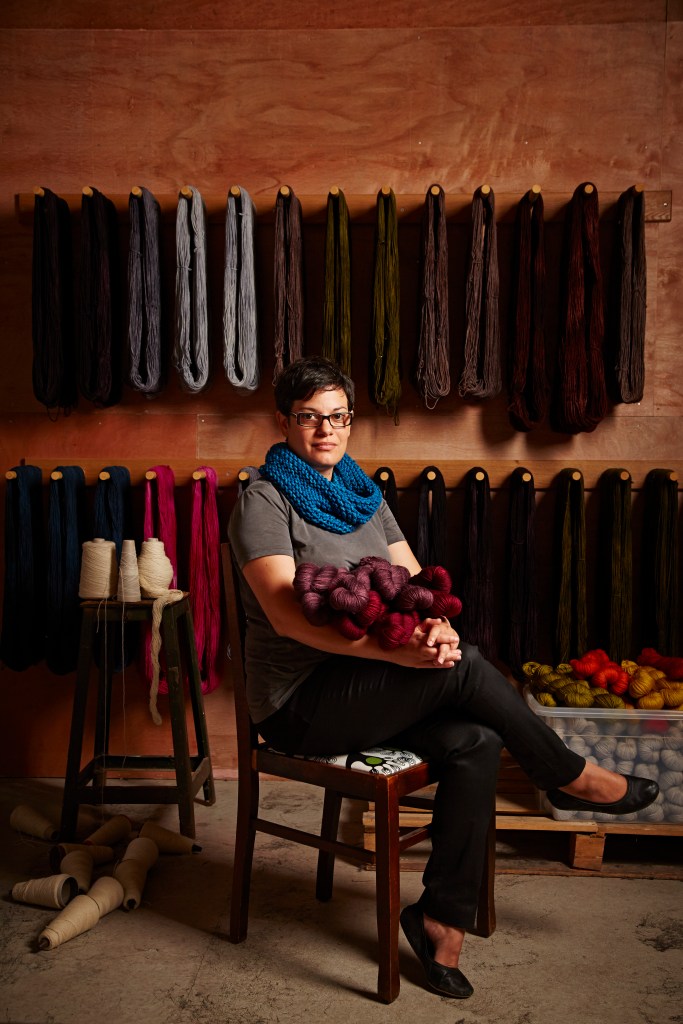
What prompted you to start a business?
It sort of happened, more than making a conscious decision. I started knitting maybe a couple of years before I got pregnant with my son. After I had him, I didn’t have much money, I was on state maternity allowance. And that was about the same time I discovered hand-dyed yarn. I couldn’t afford to buy much of it, so I thought I’ll try dyeing some! I was knitting with it but producing quite a bit because I was really enjoying it. I started putting it up on Etsy, and it just snowballed from there.
The business was tiny when I first started. Just me in my kitchen dyeing one or two skeins at a time. And now I have a studio dedicated just to dyeing yarn, which I love.

Where did the name come from?
I like the expression “the common thread”. It evokes the knitting community and the act of knitting itself. I know yarn isn’t thread, but I hope hand-dyed yarn is uncommon. That my yarns are uncommon.
I think a lot of us in the knitting community are neurodivergent. I certainly am. I was diagnosed with ADHD about three years ago and autism 6 months ago, so, I didn’t find out until fairly recently.I imagine a lot of other people don’t even realize they’re neurodivergent. ADHD has gained a lot of traction in recent years, and a lot of people are getting diagnosed, which is great. I think the craft world in general has a lot of neurodivergent people in it, so “The Uncommon Thread” also goes with that, in the sense that we ourselves are uncommon.
I don’t love a 9-to-5. Even though I’m autistic, the ADHD wins in that respect. I don’t like being told what to do and I like to make my own schedule, so owning a business goes with that very well. And my creativity doesn’t just apply to things I make, but also to how I run the business. This form of creativity really helped me when I first started the business.

What are your favorite and least favorite parts of running a business?
My favorites are seeing people’s projects on Instagram, patterns created with our yarn and seeing the yarn in various publications.I love that it inspires so many, it’s super humbling. Getting messages and emails from people saying they received the yarn and they love it, that’s what makes me get up in the morning.
My least favorite is having so many plates to keep spinning at the same time. I enjoy being a business owner but it also means having to learn and do things you have no interest in. Everything falls on your shoulders.
And I don’t like marketing. I hate it. I rarely post on Instagram. I’m rubbish at it. I think maybe it’s that thing of blowing your own trumpet that makes me uncomfortable. I wonder if that comes from being neurodivergent. I love creating things and creating connections with people, especially wholesale customers and designers, who you have long-term relationships with. But that initial “hey, you’ve never heard of me, buy my yarn”, I find that hard.
Favorite patterns or designers?
Like everyone else, I’ve been knitting a lot of Danish designs lately: Anne Ventzel and PetiteKnit. They are classic, with a focus on construction.
I’m currently knitting a sweater with a very colorful yoke called Harvest Flower. At one point I was knitting with four different colors on the same row, which I don’t think I’d ever done before, even though I’ve been knitting for over 20 years. It wasn’t particularly fun, but the result is beautiful.
There are so many people I admire in the industry. Ysolda is amazing, and I’ve worked with her a little bit. Stephen West, of course, Laine magazine and the gorgeous books they publish, Isabell Kraemer with her very polished designs, Eri Shimizu and the Japanese aesthetic, Pom Pom, which is sadly no longer (though they are still available digitally), I could keep going! There are lots of inspiring people.
Any shops or dyers you admire?
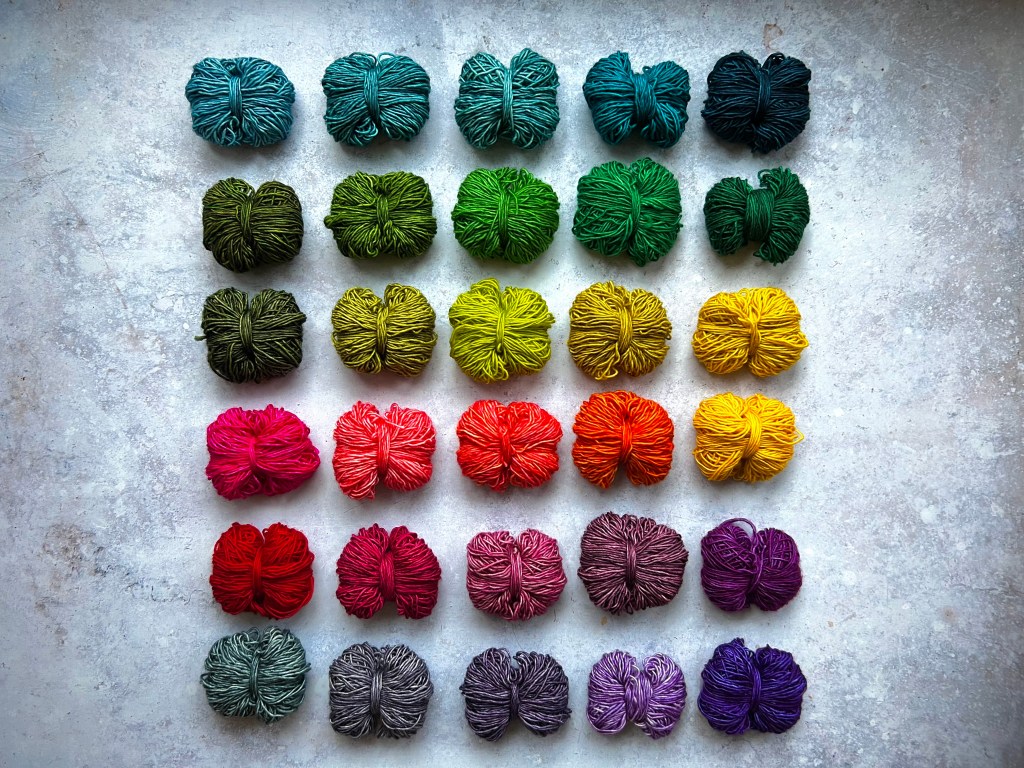
My favorite dyer of all time was Emily (of Viola yarns), who isn’t dyeing anymore. She’s a good friend, based in Canada. She was dyeing speckled yarn before it was a thing. Her speckles were very different and more subtle, I loved them.
Another is Cathrin from Walk Collection. Her eye for design is beautiful, and the way she dyes yarn is very different from mine. It’s lovely to see that contrast.
For shops, I have to mention Loop, here in the UK. They’ve stocked my yarn for many years. Any knitter in the UK, and many outside, will know Loop. It’s not huge, like some shops in North America can be, but the way everything is displayed, the samples, the color combinations… are just so beautiful. Susan, the owner, has an amazing eye for putting colorways together, which I struggle with. Creating colors is one thing; combining them is another. She’s very good at that.
Any advice for people considering opening a store?
Do it.
I don’t have a brick-and-mortar shop, that’s another dimension and not something I’d want to take on. But in terms of dyeing yarn, it’s easy to get into. You can start with no investment and grow organically, which is what I did.
There’s a lot of competition now. When I started 15 or 16 years ago, it was the early days of hand-dyed yarn. It was easier. Now every other knitter seems to be dyeing yarn. So find your USP (Unique Selling Proposition) and lean into that.
If you’re selling products you don’t make, choose products you love working with. When I decided to stock fabrics and tools, I chose things I loved: fabric designers I admired, tools I used all the time, like ChiaoGoo needles. I chose things I genuinely enjoyed.
What are you most looking forward to regarding your store?
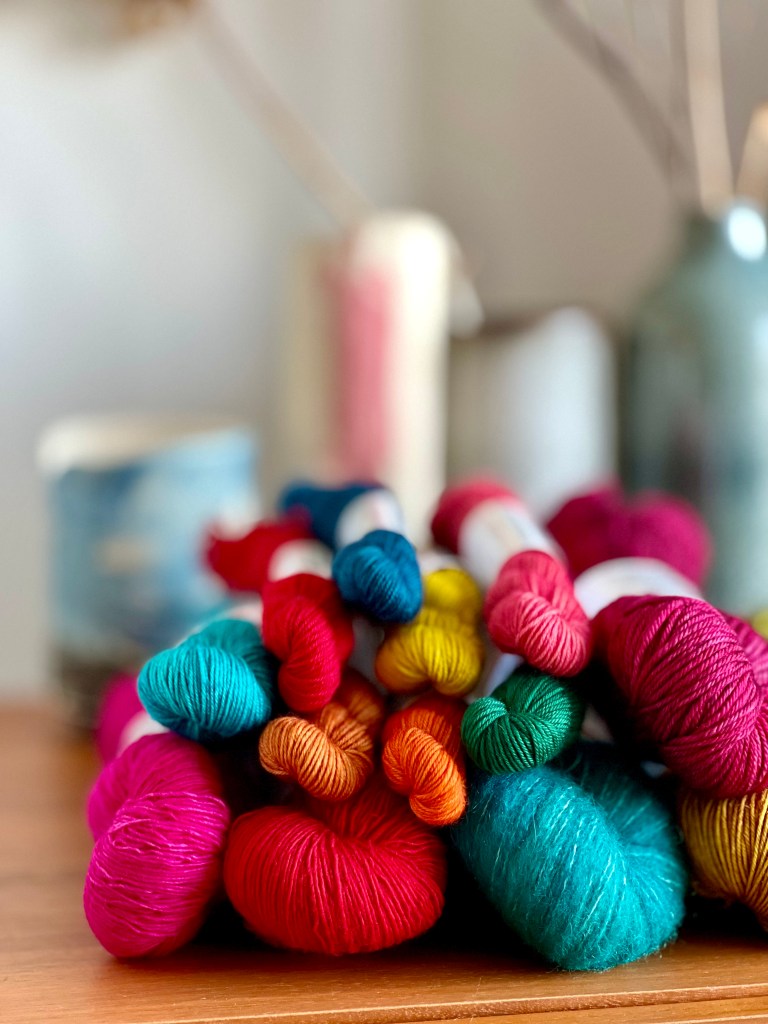
I’ve got a collaboration coming up in the autumn. I love working with designers. You dye the yarn, send it off, and then you kind of forget about it. Then one day, they send you photos of what they’ve created and it’s so exciting.
That actually happened this week. She sent photos and it looks amazing. That’s one of the things I love about yarn: it’s not a finished product. It becomes something else through someone else’s creativity. I really love seeing what it becomes.
 Replic: the blog