
In this interview Rosie Stirling recalls how she transitioned from employee to owner for Sew Over It and the unexpected challenges, and delights, that came with becoming the boss. She also gushes over the kind-heartedness of the sewing pattern community, offers advice for future entrepreneurs and those looking to scale, and shares her excitement to participate in the future of the indie sewing industry.

What prompted you to start a business?
I officially took over Sew Over It from Lisa Comfort three years ago now. Around 2022, Lisa started thinking about selling the business. For her, it was the right time to move on to a new adventure. At first, there was talk that it might be sold to a big corporation, like Hobbycraft. But what was most important to Lisa was that the company continued. If it had gone to a large corporation, there was a risk it would just be sold off for parts. Maybe they’d keep the patterns and get rid of the team.
There was an assumption they might keep me for a short time because I knew how everything ran, but who knows how long that would have lasted.
When it became clear that Lisa really wanted the company to continue as it was, someone suggested: is there anyone who could run it? And she thought there was.
I remember sitting in a café thinking we were having one of our usual update chats, and she proposed that I take over. It was very terrifying at first, but also very exciting.
If I’m honest, I’d never imagined I would run a business. But operationally, I was already running it. I just hadn’t quite made the connection that it was only one more step to actually being in charge. I think it was her having faith in me that made me think “actually, I can do this”.
My dad ran a textile business, so maybe there’s a tiny bit of heritage in my blood. And I’d been there for seven or seven and a half years at that point. I was passionate about the company and the team.
There was also an element of, if I don’t say yes, what’s going to happen?
Taking over has been a rollercoaster. I love it, but the economy has changed so much in the last three years that it feels like running a completely different business. Financially it’s very different, and the way people buy has changed a lot compared to five or six years ago.
In all honesty, I don’t know if I would have started a business from scratch myself. But I think I would have reached a point in my career where I wanted more. Ultimately, it was someone else having faith in me that allowed me to take the risk.
It was very exciting. And quite scary.
Where is the name coming from?
I don’t actually know the full story. I don’t think it’s as deep as people imagine.When Lisa started it, it was just a fun sewing pun. At trade shows, people sometimes ask if you put the pattern on and sew over it and it tells you where to stitch, and we have to say “no, it’s just a name!”
I don’t think there’s anything deeper than an excellent sewing pun, unfortunately.
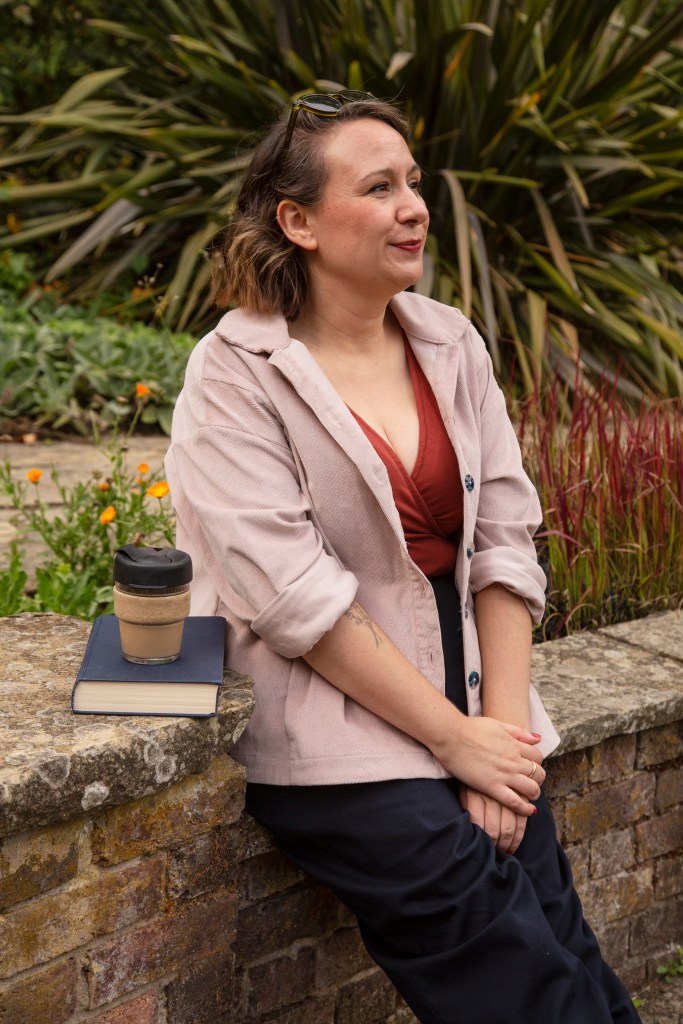
What are your favorite and least favorite parts of running a business?
It’s a bit of a double-edged sword. My least favorite part is tricky or sensitive HR situations. But my favorite part is working with a great team. I massively underestimated how much I would love that.
When I first took over, I thought mostly about patterns and teaching. I didn’t realize that what I would really love is developing a team, building camaraderie, and creating a workplace where people can thrive. Facilitating what others get out of their job is probably my favorite part. I also didn’t realize that bosses get nervous about appraisals too! It’s nerve-wracking on both sides.
Financial learning curves can also be stressful. When things change or you’re not used to certain aspects of business, it can also be very stressful. But there are so many good things that outweigh that.
Any favorite fabric stores?
In the UK, I use Sew Me Sunshine a lot. I really like Harriet. She actually started sewing with us, which I love.
I also use Minerva because they just have an enormous amount of fabric. If you want something, they’ll probably have it.
In London, I love Woolcrest Textiles because it feels like an Aladdin’s cave. And around the corner is The New Craft House. They offer very different things, and it’s such a nice double act if you’re going fabric shopping.
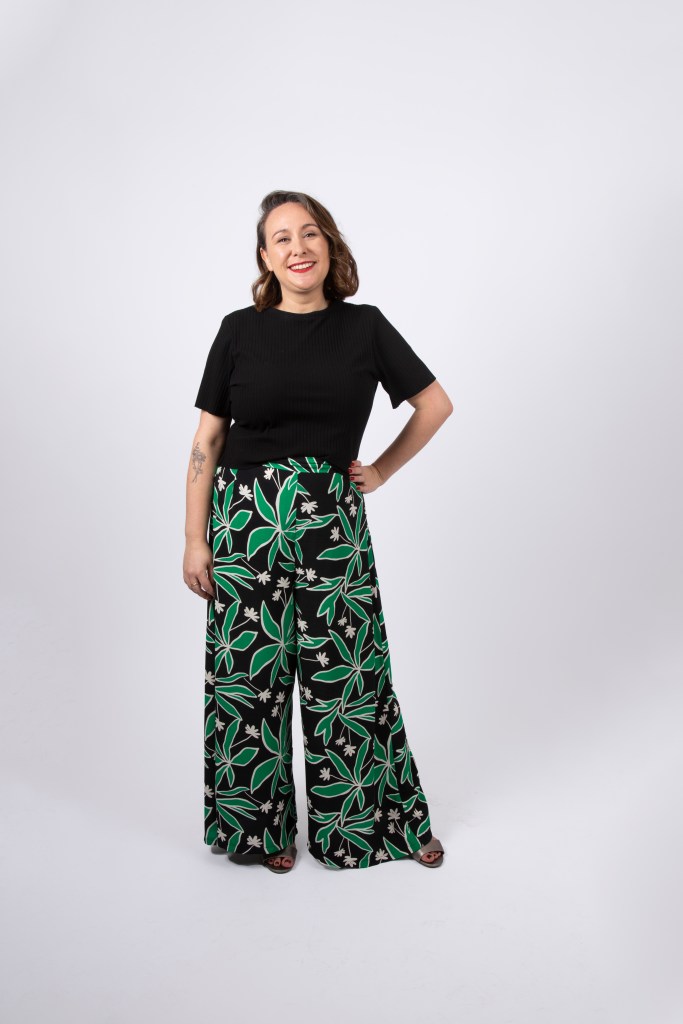
Any other pattern designers you admire?
Yes, definitely.
I love Bella Loves Patterns. From what comes across, she has insane attention to detail and is always trying to level up people’s sewing. It feels like she’s really nailed her niche.
Cashmerette as well. I massively admire how they’ve found their area and run with it so well. I love how their patterns mix and match so thoughtfully.
And Seamwork. I started sewing back when they were Colette. I love how established they’ve become and the strong community around them. We once both released a “Penny Dress” at the same time, and they reached out to apologize and sent us their pattern and stickers. I’ve loved them ever since. It says a lot about their community spirit.
Any advice for people considering opening a pattern brand?
I think it depends on the scale. If you’re doing it on a smaller scale and fitting it around your lifestyle, that can be sustainable. But don’t do it for loads of money. That’s not really where huge money is right now. Do it because you love it. It’s a lot of work, so you have to absolutely love it.
It’s not all creative. There’s maths, spreadsheets, tech, and admin. You have to be prepared to do a bit of everything.
If you’re scaling bigger and working with others, don’t be scared to hire people who are better than you at certain things. You don’t have to do everything yourself. There will always be someone better than you at something. Let them do that job. And if you scale up, it will take over your life.
What are you most looking forward to?
I’m excited about the future. Even though there are lots of pattern companies now, there’s still an endless flow of ideas, styles, and communities. I believe there are enough customers for all of us because every company has its own special place.
It makes me really happy seeing what customers create with our patterns. I’m excited to see where the indie pattern scene goes next. It’s really only been the last 10–15 years that it’s ballooned like this.
We’re all along for the ride.
Is there anything I forgot to ask that you wanted to talk about?
Not really. I think we covered a lot. I’d just recommend everyone try to get their friends to sew. I think it’s amazing, and people are really missing out when they don’t.

 Replic: the blog