
In this interview, Geertje Baugh shares how her love of buying fabrics, combined with the closing of the fabric shop she was working at, pushed her to open her own store, Catkin & Scraps, several years ago. The friendly owner recalls how the name came to be, and discusses her new found-love for teaching. She also candidly shares how her resolute commitment to sustainability appears in all facets of her business, how the current international tariffs war negatively affects even smaller shops, and how challenging social media can be for camera-shy managers.

What prompted you to start a business?
Well, mostly my love of buying fabrics. I worked in a fabric shop for a long time. I managed the shop part, and the lady who owned it taught the sewing classes. I did that for quite a few years. And then she told me that she was going to retire, and I thought “I cannot lose my fabric fix”.
So it was partly that, and it was also partly looking at my own sewing stash and the realization that I would never be able to sew all the fabric that I had in my life. I had so much fabric! I thought, “well, I don’t want to stop buying fabric, so if I just sell the ones that I don’t use, then I can keep buying more fabric”, which is my favorite thing to do.
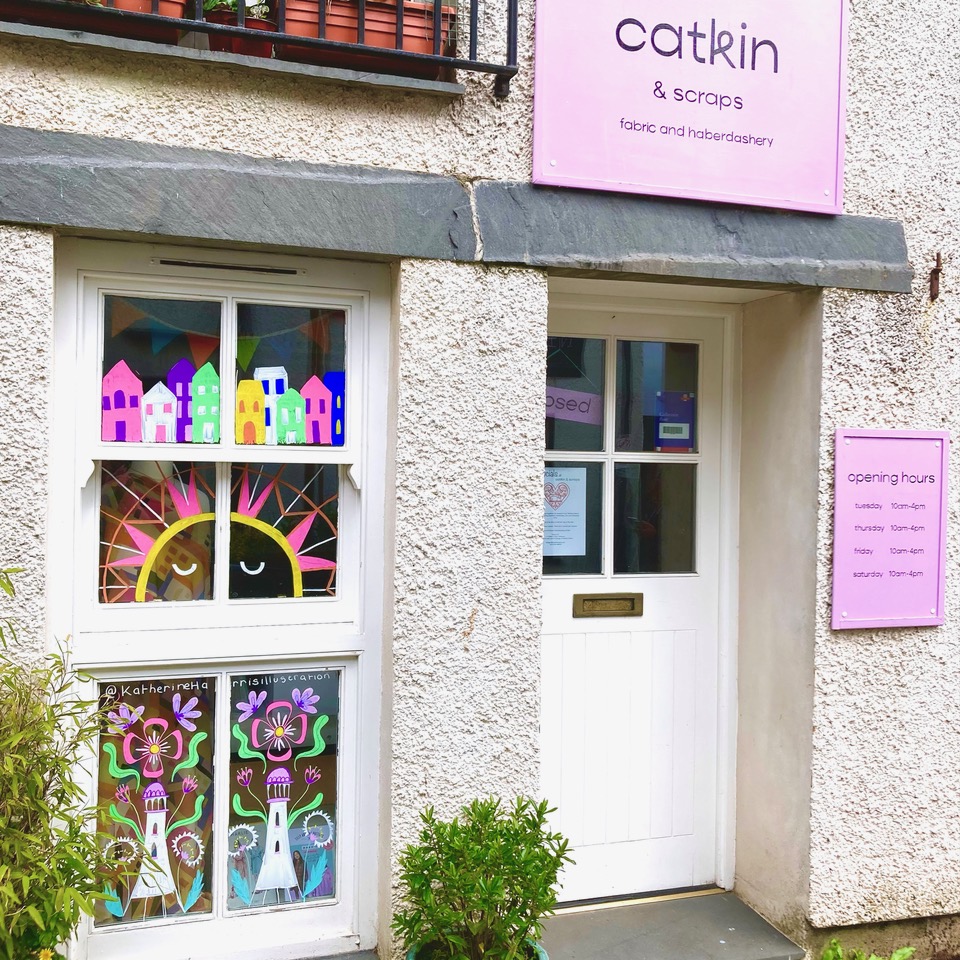
It started off with me selling my own stash on Etsy. Then I started buying fabric to sell specifically. After a few years of really slowly building it up and doing it from my house, I took the plunge and opened a tiny little shop in the town where I live called Ulverstone.
And now I teach sewing as well. So it’s not just buying fabric anymore.
Where is the name Catkin and Scraps coming from?
It’s not a particularly good story. I just wanted a name that was “something and something” because I thought it sounded fancy. It was spring when I was thinking of names, and I’ve got a willow tree outside my window which had catkins on, so that’s partly what made me think of it.
And then I imagined a little cat character and a little mouse called Scraps as a branding idea. I thought I could do marketing around these characters. I didn’t end up doing that. But I did end up liking the name.
And scraps are also really important to me. I try to run my business really sustainably. I don’t want to throw any fabrics away because a lot of work went into making them, and they’re beautiful. So even the tiniest scraps, I try and use it all in various ways.
What are your favorite and least favorite parts of running a business?
I’ve already said my favourite is buying fabric. But since I started teaching, that might be my new favourite. People are so happy when they learn to sew. It’s like a positive feeling that ripples outwards. I’ve taught people to sew and then they’ve taught somebody else, and it just keeps going.
Seeing someone having made their first garment or their first bag, that makes me the happiest!
My least favorite thing is probably social media. I’m not a natural. I don’t like putting my face on or doing selfies and all the stuff you kind of have to do to get people to notice your business. I’m not very good at it. It’s the weakest part of my business because I don’t enjoy doing it and I don’t really know what I’m doing.
And one of the other bad things about it is you do your social media and then you suddenly get sucked into scrolling Instagram for half an hour without even realizing it. So it sucks away your time as well.
Any favorite sewing patterns or designers?
I’ve got a few tried and tested sewing patterns. The Hinterland Dress by Sew Liberated is one of my favorites. I’ve made that quite a few times and I’ve taught classes with it as well, and it just seems to suit everybody and fit everybody. The Hope Dress by Style Arc is another one that just works for everybody. I’ve made loads and I love them. And Sew House Seven do the Free Range Slacks, which I really love. That’s my favorite trouser pattern. So I’d say those are my top three.
I stock quite a few pattern designers that I really love, like the ones I’ve mentioned. Also Wardrobe by Me is a really nice pattern designer. I love that they’ve got such a wide range and they cater for men as well, which is quite hard to find with indie patterns. I love stocking things for men because I think more men should sew. I always try to make sure I’ve got things suitable for them, even though I’ve only got one man in all my sewing classes.
And everyone in sewing is so nice. I haven’t met a person that I didn’t like who sews.
Any other stores you admire?
There’s one down the road from me called Jenny Stitches in Barrow. She’s in such a difficult place to run such a big store, but she does so well. She’s really good with her social media. I’m always watching her thinking, “oh, I should be doing that”. She’s very impressive.
Fabric Godmother is another store that, I think, is doing really well.
There’s another one in Kendal called Cool Crafting. They’ve got a beautiful little shop in Kendal and they’re behind Luna Lapin, which is a little bunny rabbit sewing pattern that’s very popular. They’re the only place that sells it because they made it. They’re also just a really nice team. They come and shop in my shop sometimes and they’re always so nice.
And another business I really look up to is Bawn in Glasgow. They have a beautifully curated range of sustainable fabrics and their marketing is always spot on. They do sustainability really well.
Do you have any advice for people considering opening a store?
I almost want to say: don’t. It’s not a good time. It’s so hard to keep going. I’m holding on by the skin of my teeth at the moment. I think I’ll get through it, but I’m going to have to be really cautious this year to keep my head above water. It’s really hard, so you’ve got to really love it.
The way I keep going is being really flexible and adaptable. Listen to what the people around you want and keep adapting and changing to the circumstances. You can’t just go in with an idea and keep doing that idea no matter what. You have to listen and watch the changing circumstances and adapt your business to suit.
I think probably the reason I can keep going is because I’m tiny. I don’t employ anybody. I do it all myself. I’ve only got very small premises and only four people in my sewing classes. It’s tiny, but that makes it easier to adapt and change and keeps the fixed costs lower so I can deal with bad times.
What are you most looking forward to?
I’m already doing all the things that I want to do. I’m really happy with where I’m at. I hope the global situation gets a bit better and easier to deal with. At the moment I can’t post anything to the EU anymore. It’s really hard to post to America. Online things are really difficult for a tiny business like mine. I hope somebody comes along and makes that easier.
But I’m happy with my little group of sewers that I’m teaching. We have a great time. My customers are lovely.
I’m just starting to stock knitting wool because there’s no wool shop in town. That’s really fun to get into a little new area. I’m learning to knit at the moment because you have to be able to do it yourself. I’m looking forward to making my first jumper.
Is sustainability something you think about in your business?
Sustainability is really important to me. It’s a core part of my business. I try to look at it from lots of different angles. I stock a lot of organic quilting cottons. I stock secondhand fabrics. People can come and get scraps for anything they want. I give scraps to schools and to people who want to mend things.
But most of my customers aren’t that interested in sustainability. I wish more people were. It’s important to me that things are sustainable and beautiful. People buy my stuff because it’s beautiful, not because it’s sustainable. That’s not really on their radar, and I wish it was more so.
When people are making their own clothes, there’s already an element of sustainability because they’re not outsourcing to cheap labor in bad conditions. That’s great. But I still want a bit more focus on the quality of the fabric, the provenance of the fabric, and the sustainability of it.
My business isn’t perfect in that regard. But it’s something I care deeply about.
 Replic: the blog