With a background in fashion design and a deep interest in the stories our clothes tell, Emily Hundt launched In the Folds in 2015. What began as a creative experiment grew into one of Australia’s most respected independent pattern brands. In this conversation, Emily reflects on how she found her path from fast fashion to slow sewing, the meaning behind her brand’s name, the joys and tedium of creative work, and the bittersweet transition as she closes a major chapter to rediscover the joy of sewing for herself.
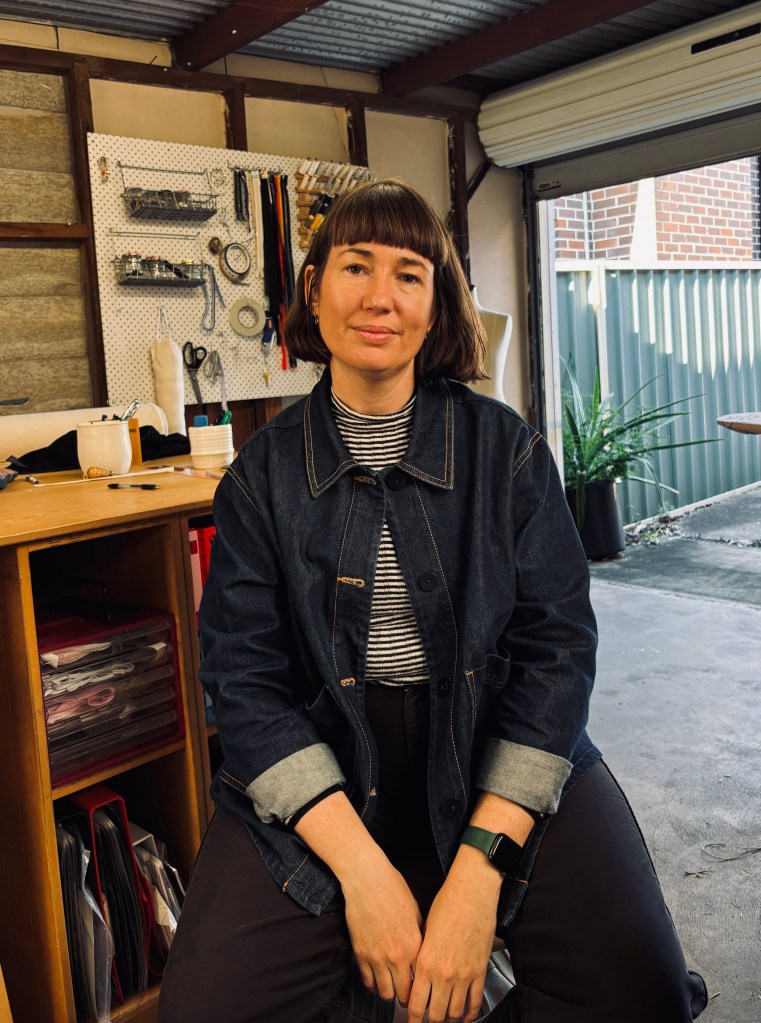
What prompted you to start a business?
I started In the Folds in 2015. I’d studied fashion design, and during my degree, I became really disillusioned with the fast fashion industry. I hated the waste, the pace, the lack of connection to the people making the clothes. After graduating, I moved to London to do internships and figure out what was next.
While I was there, I came across a platform called The Good Wardrobe, which focused on slow sewing and sustainable fashion. That’s where I first learned about indie pattern brands. Tilly and the Buttons was one of the companies featured. It was such an eye-opener. I realized there was this whole world of people sewing for themselves, and I started sewing again for fun, not just for assignments.
When I moved back to Sydney, my partner and I had the opportunity to live cheaply for a while, and I thought, why not try starting a business? The indie pattern scene was still quite new back then, and it felt like the right moment to give it a go.
Where does the name In the Folds come from?
I was really struggling to find a name at first. I went back through my portfolio from my graduate show, and I realized how much my work had always been about the stories embedded in garments, how clothes hold memory and meaning. I’ve always loved the idea that when you buy something secondhand, you can imagine who wore it and where.
In one of my notes, I’d written the line “in the folds, there are stories.” And that was it. That’s what I was looking for. It captured everything I wanted the brand to be about: value, story, and connection.
At the time, I didn’t quite know what I was creating. My first logo even said “sewing patterns and womenswear.” I thought I might go into ready-to-wear, but as I started engaging with the home sewing community, I became fascinated by how differently bodies are shaped and how empowering it is to make clothes that actually fit you. That really cemented my path toward pattern design and teaching people to sew for themselves.
What are your favorite and least favorite parts of running a business?
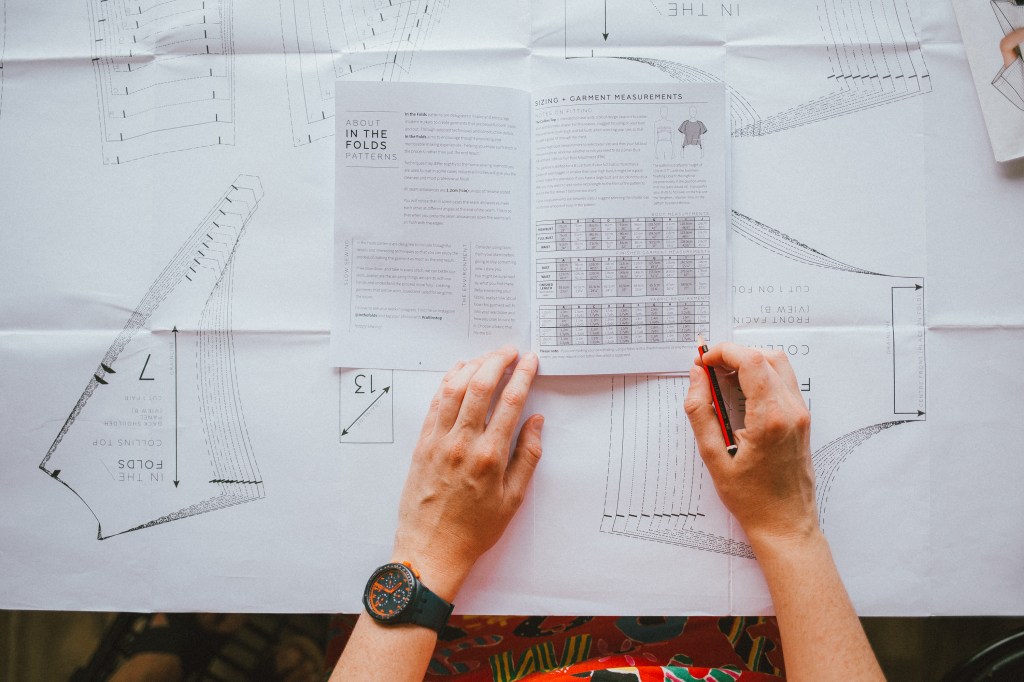
My favorite part is definitely the design stage. When I get an idea for a new pattern, I just get to play. My process has changed so much over the years. I used to start by cutting straight into fabric, but now I work a lot with CLO3D to experiment with shapes digitally first. That early stage of exploration is still the most exciting part for me.
The least favorite part? All the repetitive tasks: putting up product listings, formatting cutting plans, entering measurements, anything I’ve done a million times. Even building instruction booklets starts off fun and then becomes a slog toward the end.
Do you have favorite fabric stores?
I actually don’t buy a lot of fabric! I try to buy secondhand whenever I can, sometimes through local marketplaces or from people destashing. There’s a place in Sydney called The Sewing Basket that I love. It’s all pre-loved fabric, much of it donated, so it feels like a treasure hunt.
I also go to Greenfields, which is a wholesaler. It’s very old-school and a bit intimidating, but you can find amazing fabrics at great prices. And of course, the classics like The Fabric Store, Tessuti, The Remnant Warehouse. They’re all Sydney staples.
I’m not a huge fan of buying fabric online; I find it hard without being able to touch and feel the drape. But I do trust some shops, like The Fabric Store, because you know exactly what you’re getting.
Are there other pattern designers you admire?
I really admire the designers who started around the same time as I did because it’s a tough industry. People like Tilly and the Buttons and Grainline Studio. They’ve built such strong brands and stayed true to their vision.
From a business perspective, I think Closet Core Patterns is really interesting. They’ve adapted so well over time. Cashmerette too! They’re so focused on their niche and do it brilliantly. Seamwork has also evolved a lot.
But more than the patterns themselves, I admire the women behind these brands and the way they build community and navigate challenges. Helen from Helen’s Closet is a great example of someone who’s built a real sense of connection and accessibility in her work.
What advice would you give to someone considering starting a pattern brand?
Get really good at what you do, more than ever before. There’s a lot of questionable quality online right now, and even AI-generated patterns. It’s disappointing when people have a bad experience, because it gives the whole industry a bad name.
Don’t rush into it. It takes a lot more work than you think. And definitely don’t do it for the money! It’s a competitive industry, and margins are small. Focus on making something that doesn’t already exist.
Also, if there’s something you’re not great at, like grading, layout, technical writing, hire someone who is. Invest in that quality early on. What’s kept In the Folds strong over the years is trust. Sewing is an expensive, time-consuming hobby. When someone spends their time and fabric on your pattern, you want them to have a great experience. That trust is everything.

What are you most looking forward to right now?
I’m closing down our monthly project subscription – Curated by ITF at the end of the year, which is bittersweet. It’s been running for four years. But I’m excited for what’s next. I’ve started a Substack where I write about the behind-the-scenes side of my business, and I’ve really enjoyed writing without worrying about everything being so polished.
I’ve also started sewing for myself again, for the first time in over a decade. For so long, sewing became work, so I’m trying to reconnect with it as something I love. I even bought an industrial sewing machine and moved my studio home to make it all feel more natural.
It’s still a challenge not to turn everything into a potential pattern. I’ll start a shirt for myself and immediately think, “could this be next year’s release?” But I’m learning to slow down. To just make things because I like them. That’s what I’m most looking forward to: rediscovering that simple joy of making.
 Replic: the blog