
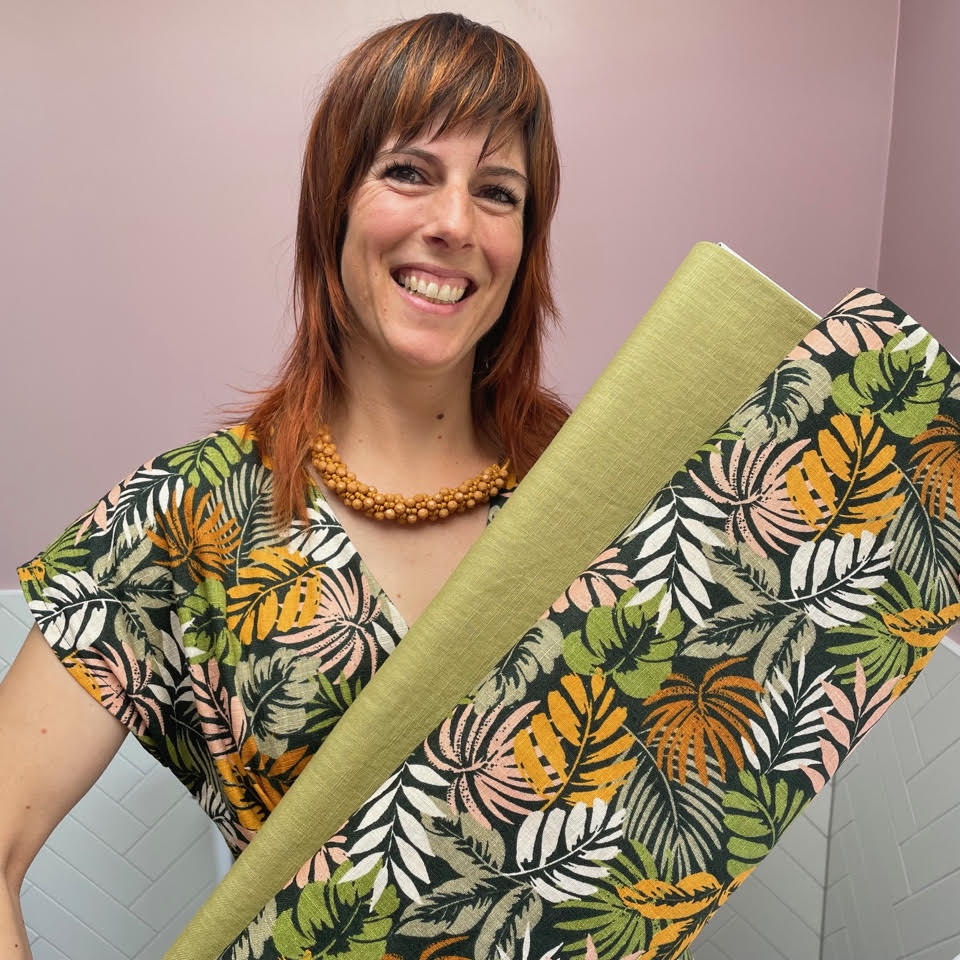
Meet Tanya Brooman, the founder of Bornella Fabrics: a sustainable fabric store with a colourful name and a serious mission. In this interview, Tanya talks to us about how her business got started, what it’s like behind the scenes, and how online stores can still foster strong personal connections with their customers.
What prompted you to start a fabric business?
I wrote a bucket list of things I wanted to do before I turned 40. It included sewing a garment to wear. It had actually been on my bucket list since I was 16. But for one reason or the other, I never ever did it. I finally made that first garment, and I was absolutely hooked. This was pre-pandemic, in 2019.
I went in headstrong and made many garments very quickly. Which meant buying a lot of fabric online. But I found that experience frustrating. I am not saying Bornella Fabrics fixed all these frustrations for other shoppers. But my personal shopping experience gave me a solid understanding of the problem, from a consumer point-of-view at least. I’ve stuck to that angle: help people buy fabric better.
Next I didn’t want to open any old fabric store. I wanted something more meaningful. There are lots of great businesses, but trying to find sustainable fabric was like finding a needle in a haystack. So I thought: what if there was a one-stop shop for people who want to buy fabric better, and more sustainably? Fabric that was kind to the planet.
At the time, there were two other UK businesses with a similar idea: Good Fabric and Bawn Textiles in Scotland. We all started within about a year of each other.
Where did the name Bornella come from?
I wanted something unique to me. I have a few great loves in life and one of them is sea slugs. I’m a qualified divemaster and I used to do a lot of diving. I was flicking through one of my nudibranch identification books (yes, I have several), and Bornella is a type of sea slug. One of the most pronounceable ones, as many have latin-based names.
They’re incredibly colourful and beautiful. Most sea slugs are! It’s something you really have to experience for yourself. I’ve never seen a Bornella in the wild, by the way. There are two types, and I haven’t seen either. One day! But the name stuck.
What are your favourite and least favourite parts of running the business?
Favourite part, and the most surprising, is the customer interaction. I assumed an online business would be very anonymous. But I’ve found it very personal. I love getting messages from customers saying they received their parcel and loved the fabric. Or seeing what people have made if they post it online. It honestly makes everything worth it.
As for my least favourite part? Lugging things. There’s so much heavy lifting involved. Knowing I have to move deliveries from one place to another fills me with dread. I actually don’t mind the paperwork, but I’m not great at keeping on top of tech and all the platform updates and tools. When I get another employee, I’ll likely assign them that task!

Do you have any favourite sewing pattern designers?
Yes!
Bella Loves Patterns: the instructions are a masterpiece. The level of finish you get from her patterns is just fantastic.
Are there other fabric stores or businesses you admire?
Definitely. Some of the smaller indie fabric stores are doing amazing work. I already mentioned Good Fabric and Bawn Textiles. Firstly we’re similar in our sustainability approach. I also really admire how they champion up-and-coming designers and fabric companies.
Hey Sew Sister too. Georgie does such an amazing job. Everything she puts out is so beautiful, from the packaging to the handmade products.
What advice would you give to someone thinking about opening a fabric store?
I’ve probably got lots of advice, based on my own pitfalls! The first one is: don’t overthink it.
Find something you really love, because you’ll be doing it all the time. Whether it’s knits, linen, brights, or neutrals, build around that. Have your nugget of an idea that you really, really love. Then grow and build around it. And this takes me to my second piece of advice.
You’ll learn on the job. You shouldn’t start with a fully formed idea. In a year’s time, three years’ time, it’s going to look different. Maybe you wanted to go in a certain direction. But what you think and what your customers think might be different. You need to be flexible and adaptable. It really comes back to the connection with the customers. Take in their feedback. Do they want more of something? Great! Sales are dwindling? Fine, park it!
Relationships with suppliers, customers and other business owners will build over time. But you have to start. Don’t overthink that first step. Just go for it and then build from there.
What are you most excited about for the future of Bornella?
Growth. I want more say and more sway when it comes to sustainability and environmental standards in the fabric industry. Right now, sustainable fabric is often treated like a tick box. For fabric buyers, it’s something nice to have, but not essential. At the end of the day, even if it’s not sustainable, customers just want the fabric they want and choose based on other considerations like price or colour.
Through growth and sales, you can put more pressure on suppliers. I currently tell my suppliers “I won’t stock polyester, don’t even show it to me.” And yet, they keep showing me fabrics and telling me it only has 5% polyester. That’s still plastic! You don’t tell vegetarians “this only has a little bit of meat!”
There’s too much plastic in clothing right now, and it’s only getting worse. I went to a trade show recently, and there was more polyester than ever. It’s depressing. It’s not just fast fashion either. Designer deadstock is full of synthetics too.
I’d love to be in a position where I can have a meaningful impact on the supply chain. I already get great feedback on the fabrics I choose and the ones I manufacture, but I have to be very selective. I want to be presented with more sustainable choices. The more we can push back and ask for natural fibres, the more the industry will have to adapt. I want to be part of that change.
 Replic: the blog